

Being diagnosed with a hernia naturally leads to the next question: what treatment will I need? While some small hernias can be monitored for a period of time, most do not heal on their own and will eventually require surgery to repair the weakened abdominal wall.
The most appropriate treatment depends on the type of hernia, its size, your symptoms and your overall health. Understanding the available options can help you feel more prepared when discussing treatment with your surgeon.
When Is Hernia Treatment Recommended?
Not every hernia requires immediate treatment. If it is small, causes few or no symptoms and can be pushed back into the abdomen, your surgeon may recommend monitoring it with regular follow-up appointments.
However, most hernias do not heal on their own and often become larger over time. Surgery is generally recommended if the hernia causes pain, interferes with daily activities, continues to grow or has a risk of complications.
Your surgeon will assess the type of hernia, your symptoms and your overall health before recommending the most appropriate treatment approach.
Can Hernias Be Treated Without Surgery?
Although surgery is the only permanent hernia treatment, non-surgical management may be appropriate for selected patients, particularly if symptoms are mild or surgery needs to be postponed. This approach focuses on managing symptoms rather than repairing the hernia and may involve:
- Avoiding heavy lifting and activities that increase abdominal pressure
- Maintaining a healthy weight
- Treating chronic cough or constipation to reduce straining
- Wearing a supportive abdominal binder if advised by your doctor
These measures help manage symptoms but do not repair the weakened muscle. Regular review remains important because the hernia may gradually enlarge over time.
What Types of Hernia Repair Are Available?
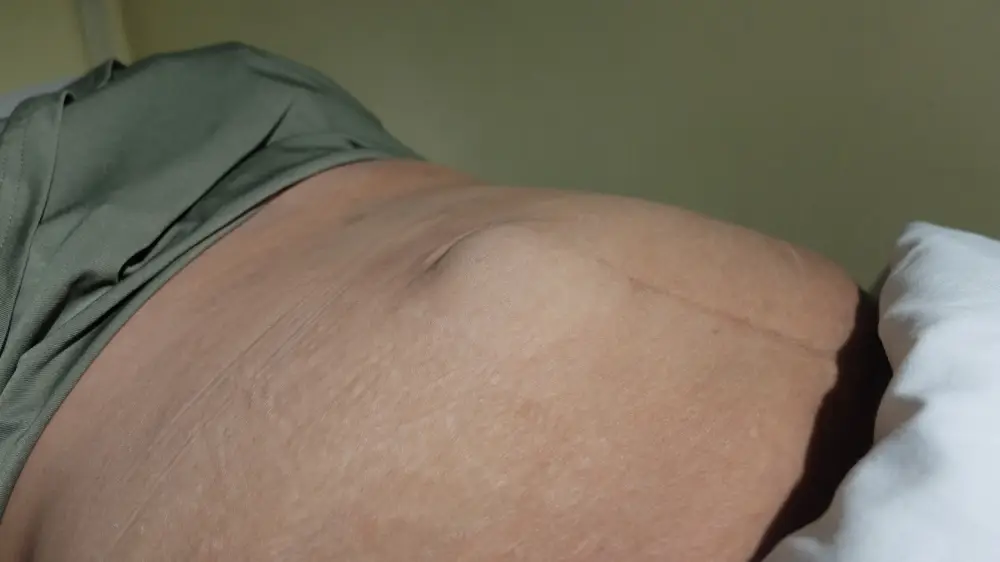
Hernia surgery repairs the weakened area of the abdominal wall to prevent the hernia from recurring. This can be done in two main ways: by closing the defect with stitches or by reinforcing it with surgical mesh.
Herniorrhaphy (Suture Repair)
Herniorrhaphy is the traditional method of hernia repair. The weakened muscle is stitched back together after the hernia has been repositioned.
While this technique may still be suitable for selected small hernias, it is less commonly performed today because bringing the muscle edges together creates tension on the repair, which may increase the risk of recurrence.
Hernioplasty (Mesh Repair)
Today, most hernia repairs are performed using hernioplasty. Instead of relying on stitches alone, a surgical mesh is placed over or beneath the weakened area of the abdominal wall. Over time, surrounding tissue grows into the mesh, creating a stronger repair while reducing tension on the muscles. This helps lower the risk of the hernia returning.
Both herniorrhaphy and hernioplasty can be performed using either an open or laparoscopic surgical approach.
Open vs Laparoscopic Hernia Surgery
After determining the most appropriate repair technique, your surgeon will recommend either an open or laparoscopic approach based on the type of hernia, its size and your overall health.
Open Hernia Repair
Open hernia repair involves making an incision directly over the hernia, allowing the surgeon to repair the weakened abdominal wall using stitches or surgical mesh.
This approach may be recommended for:
- Larger or more complex hernias
- Some incisional hernias
- Patients who may not be suitable for laparoscopic surgery
Many open hernia repairs are performed as day surgery, although some patients may stay overnight for observation depending on their overall health.
Laparoscopic Hernia Surgery
Laparoscopic hernia surgery is a minimally invasive procedure performed through three small incisions using a camera and specialised instruments. The weakened area of the abdominal wall is typically reinforced with surgical mesh.
Compared with open surgery, laparoscopic repair may offer:
- Smaller incisions
- Less postoperative discomfort
- Faster recovery
- Earlier return to normal activities
- Smaller scars
Laparoscopic surgery may be recommended for bilateral or recurrent hernias. However, it is not suitable for every patient, and your surgeon will advise whether this approach is appropriate for your condition.
Choosing the Right Hernia Treatment for Long-Term Recovery
Most hernias eventually require surgery, but the best treatment is not the same for everyone. The type of hernia, its size and your individual circumstances all influence which repair is most suitable and how your recovery is likely to progress.
At our hernia clinic in Singapore, patients receive comprehensive assessment and personalised hernia treatment under the care of Dr Ho Kok Sun. If you have been diagnosed with a hernia or would like to better understand your treatment options, arrange a consultation to discuss the most appropriate treatment for your condition and what you can expect throughout your recovery.
Frequently Asked Questions (FAQs) About Hernia Treatment
-
Can I choose between open and laparoscopic hernia surgery?
Not always. The most appropriate approach depends on the type, size and location of your hernia, your previous surgical history and your overall health. Your surgeon will recommend the technique that is most suitable for your condition.
-
Can more than one hernia be repaired during the same operation?
Yes. If you have multiple hernias, such as hernias on both sides of the groin, they can often be repaired during the same procedure where appropriate.
-
Will I be able to exercise again after surgery?
Yes. Light walking is encouraged soon after surgery, while more strenuous activities are introduced gradually. Most patients can return to their usual exercise routine once healing is complete and their surgeon has given clearance.
Meet Our Hernia Surgeon in Singapore
Dr Ho Kok Sun
Consultant Colorectal & General Surgeon
MBBS (Singapore), M Med (General Surgery) (Singapore)
FRCS (General Surgery) (Edinburgh), FAM (Singapore)
Dr Ho Kok Sun is a Ministry of Health-accredited hernia surgeon in Singapore with over 15 years of experience in the surgical treatment of hernias. He completed his general surgery training before undertaking a colorectal surgery fellowship at Cleveland Clinic Florida. In addition to hernia surgery, Dr Ho has extensive experience managing complex colorectal conditions and has a strong interest in minimally invasive surgery and advanced therapeutic endoscopy.